


 |
 |
 |
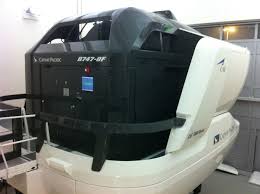
B747-8F Full Flight Simulator (FFS) |
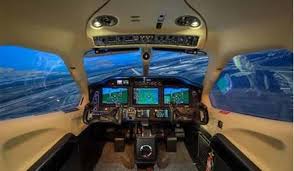
TBM 930 Flight Training Device (FTD) |
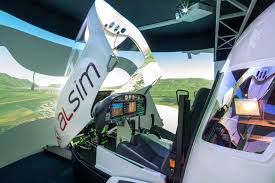
DA42 Twin Star Flight and Navigation Procedures Training (FNPT) |
General
The STI course will give a candidate a sound knowledge of instructional techniques appropriate to teaching in a FSTD such as a FFS, FTD 2/3 or FNPT II/III and will enable the candidate to be able to provide training to students on specific courses in accordance with the STI privileges
Please note the STI does not require a valid medical certificate
Pre-Course Entry Requirements (FCL.915.STI)
(a) Applicants for the issue of an STI certificate shall:
(1) hold, or have held within the 3 years prior to the application, a pilot licence and instructional privileges appropriate to the courses on which instruction is intended
(2) have completed in an FSTD the relevant proficiency check for the class or type rating, in the period of 12 months immediately preceding the application
Applicants for the issue of an STI(A) wishing to instruct on BITDs only, shall complete the exercises appropriate for a skill test for the issue of a PPL(A) only
Synthetic Training (FCL.930.STI)
The training course for the STI shall comprise at least 3 hours of flight instruction related to the duties of an STI in an FFS, FTD 2/3 or FNPT II/III, under the supervision of an FIE. These hours of flight instruction under supervision shall include the assessment of the applicant’s competence as described in FCL.920
Applicants for an STI(A) wishing to instruct on a BITD only, shall complete the flight instruction on a BITD.
The duration of the course will be approximately 3 days
In general the training should cover the following areas:
General Handling
Visual and Instrument Approaches
Emergency Handling
Candidates wishing to instruct on BITDs only, the training will cover the PPL(A) Skill Test schedule (see below):
PPL(A) Skill Test schedule
Section 1 Pre-Flight Operations and Departure
Pre-flight documentation, NOTAM and weather briefing
Mass and balance and performance calculation
Aeroplane inspection and servicing
Engine starting and after starting procedures
Taxiing and aerodrome procedures, pre-take-off procedures
Take-off and after take-off checks
Aerodrome departure procedures
ATC compliance and R/T procedures
Section 2 General Airwork
ATC compliance and R/T procedures
Straight and level flight, with speed changes
Climbing:
(i) best rate of climb
(ii) climbing turns
(iii) levelling off
Medium (30° bank) turns
Steep (45° bank) turns (including recognition and recovery from a spiral dive)
Flight at critically low air speed with and without flaps
Stalling:
(i) clean stall and recover with power
(ii) approach to stall descending turn with bank angle 20°, approach configuration
(iii) approach to stall in landing configuration
Descending:
(i) with and without power
(ii) descending turns (steep gliding turns)
(iii) levelling off
Section 3 En-Route Procedures
Flight plan, dead reckoning and map reading
Maintenance of altitude, heading and speed
Orientation, timing and revision of ETAs and log keeping
Diversion to alternate aerodrome (planning and implementation)
Use of radio navigation aids
Basic instrument flying check (180° turn in simulated IMC)
Flight management (checks, fuel systems and carburettor icing, etc)
ATC compliance and R/T procedures
Section 4 Approach and Landing Procedures
Aerodrome arrival procedures
*Precision landing (short field landing), crosswind, if suitable conditions available
*Flapless landing
*Approach to landing with idle power (SE only)
Touch and go
Go-around from low height
ATC compliance and R/T procedures
Actions after flight
(* These items may be combined at the discretion of the examiner)
Section 5 Abnormal and Emergency Procedures
(This section may be combined with sections 1 through 4)
Simulated engine failure after take-off (SE only)
*Simulated forced landing (SE only)
Simulated precautionary landing (SE only)
Simulated emergencies
Oral questions
(* These items may be combined at the discretion of the examiner)
Section 6 Simulated Asymmetric Flight and Relevant Class or Type Items
(This section may be combined with sections 1 through 5)
Simulated engine failure during take-off (at a safe altitude unless carried out in an FFS)
Asymmetric approach and go-around
Asymmetric approach and full stop landing
Engine shutdown and restart
ATC compliance, R/T procedures or airmanship
As determined by the FE: any relevant items of the class or type rating skill test to include, if applicable:
(i) aeroplane systems including handling of auto pilot
(ii) operation of pressurisation system
(iii) use of de-icing and anti-icing system
Oral questions
Assessment of Competence (AMC1 FCL.920 Instructor competencies and assessment)
The assessment of competence shall be included in the training course and conducted by an FIE using the performance standards laid down in FCL.920
Validity (FCL.940)
36 months
Privileges (FCL.905.STI)
(a) The privileges of an STI are to carry out synthetic flight instruction in the appropriate aircraft category for:
(1) the issue of a licence
(2) the issue, revalidation or renewal of an IR and a class or type rating for single-pilot aircraft, except for single-pilot high performance complex aeroplanes
(b) Additional privileges for the STI(A). The privileges of an STI(A) shall include synthetic flight instruction during the core flying skills training of the MPL integrated training course
Restricted Privileges (FCL.910.STI)
The privileges of STIs shall be restricted to the FSTD in which the STI training course was taken
The privileges may be extended to other FSTDs representing further types of aircraft if in the period of 12 months immediately preceding the application the holders have:
(a) completed the FSTD content of the CRI or TRI course on the class or type of aircraft for which instructional privileges are sought
(b) passed in the FSTD on which flight instruction is to be conducted, the applicable section of the proficiency check in accordance with Part FCL Appendix 9 for the appropriate class or type of aircraft
For STIs(A) instructing on BITD only, the proficiency check shall include only the exercises appropriate for the skill test for the issue of a PPL(A)
(c) conducted, on a CPL, an IR, a PPL or a class or type rating course, at least 3 hours of flight instruction under the supervision of an FI, a CRI(A), an IRI or a TRI nominated by the ATO for this purpose, including at least 1 hour of flight instruction that is supervised by an FIE in the appropriate aircraft category
Revalidation
(a) Revalidation
To revalidate an STI certificate, applicants shall, within the period of 12 months immediately preceding the expiry date of the STI certificate, comply with all of the following conditions:
(1) have conducted at least 3 hours of flight instruction in an FSTD, as part of a complete CPL, IR, PPL or class or type rating course
(2) have passed in the FSTD on which flight instruction is conducted, the applicable sections of the proficiency check in accordance with Part FCL Appendix 9 for the appropriate class or type of aircraft
For STIs(A) instructing on BITDs only, the proficiency check shall include the exercises appropriate for a skill test for the issue of a PPL(A) only
Renewal
(b) Renewal
To renew STI certificate, the applicants shall within the period of 12 months immediately preceding the application for the renewal:
(1) complete a refresher training as an STI at an ATO
(2) pass in the FSTD on which flight instruction is conducted, the applicable sections of the proficiency check in accordance with Appendix 9 to this Annex for the appropriate class or type of aircraft. For an STI(A) instructing on BITDs only, the proficiency check shall include the exercises appropriate for a skill test for the issue of a PPL(A) only
(3) conduct, in the relevant aircraft category, on a complete CPL, IR, PPL or class or type rating course, at least 3 hours of flight instruction under the supervision of an FI, a CRI, an IRI or a TRI nominated by the ATO for this purpose, including at least 1 hour of flight instruction supervised by a flight instructor examiner (FIE)
References
AP3456 Royal Air Force Manual Flying
UK CAA Standards Documents 1, 3, 14, 19, 21, 25
UK CAA CAP 804
Part FCL, AMC and GM
Instructor Manual (Part FCL edition)