


 |
 |
 |
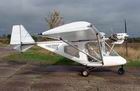
Microlight |
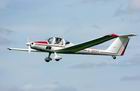
Touring Motor Glider (TMG) |
Single Engine Piston (SEP) |
General
The National Private Pilot’s Licence (NPPL) is a UK specific pilot’s licence developed in 2002. The NPPL is available for aeroplanes, motor gliders, microlights, and helicopters. The NPPL can only be used on UK-registered aircraft inside UK airspace, unless the pilot has an agreement with the aviation authorities in another country which will allow them to fly in that country's airspace.
An NPPL may contain the following class ratings: microlights, touring motor gliders (TMG) and single-engine piston (SEP) (see note)
Following an amendment to the UK Aircrew Regulations in 2021, the holder of a licence issued in accordance with the Air Navigation Order 2016 (as amended) (United Kingdom ATPL(A) / CPL(A) / PPL(A) or NPPL(A)) with a valid SEP or TMG class rating can now also fly a UK (G) registered Part 21 aeroplane or motor glider
The pilot must ensure that their class ratings are valid. All flight experience amassed when flying Part 21 aeroplanes or motor gliders can count towards meeting the revalidation requirements for the class rating
NPPL does not require a English Language Proficiency (ELP) test, however to operate radiotelephony equipment the pilot must hold a Flight Radio Telephony Operators Licence (FRTOL) with a current ELP level (4, 5 or 6)
Note: The total number of persons carried (including the pilot) does not exceed four, and the maximum certified take-off mass of the aeroplane does not exceed 2,000 kg
Minimum Age
First solo is 16 years old
Issue of an NPPL is 17 years old
Medical Requirements
A UK Pilot Medical Declaration (PMD), equivalent to the DVLA Group 1 (car) standard is required and must be done through the UK CAA online portal called CELLMA
Training Aircraft
Adequately equipped and maintained aircraft shall be used for training. Refer to specific class rating syllabus requirements
Training Airfields
Training for the NPPL shall be conducted at suitable airfields. Refer to CAP 793 Safe Operating Practices at Unlicensed Aerodromes
Instruction
Instruction for the NPPL must be carried out by a holder of an appropriate Flight Instructor (FI) certificate and class rating
SEP class rating - FI(A) or FI(A)(Restricted) with SEP class rating (see note 2)
TMG class rating - FI(TMG) with TMG class rating (see note 3 and 4)
Microight - FI (Microlight) or FI(Microlight)(Restricted) with the same type of control system for which the holder's licence is endorsed with an FI certificate (see note 1)
Notes:
1. A valid FI(A) or FI(A)(Restricted) with SEP (land) class rating only needs to undertake differences training on the type of Microlight they are looking to instruct on, with an instructor entitled to teach on the Microlight type. Once this has been signed off in the logbook, they can teach on Microlights for as long as their flight instructor certificate remains valid
2. SSEA rating has been replaced by SEP class rating
3. SLMG rating has been replaced by TMG class rating
4. FI(SLMG) has been replaced by FI(TMG)
Flight Training
Ab-initio students should complete flight training in accordance with the specific class rating syllabus requirements. The flight training hours are listed below (always refer to the specific class rating syllabus)
Microlight
The Microlight class rating or Microlight powered parachute can be issued Without Operational Limitations or With Operational Limitations. The minimum flight training required for the Microlight class rating on three axis or weight shift aeroplanes:
| Without Operational Limitations is: | With Operational Limitations is (see note 1): |
Minimum dual 25 hours |
Minimum dual 15 hours |
Touring Motor Glider (TMG) and Single Engine Piston (SEP) (see note 2)
Minimum dual 22 hours to include 1 hour instrument appreciation
Minimum solo 10 hours
Minimum solo navigation 4 hours to include a navigation flight of at least 150 km (80 nm) in the course of which 1 full stop landing at an aerodrome other than the aerodrome of departure shall be made
Total 32 hours
Notes:
1. The Operational Limitations at initial issue are:
(a) The pilot may not carry any passenger
(b) The pilot may not fly with a cloud base less than 1000 feet above ground level or with less than 10 kilometres visibility
(c) The pilot may not fly further than 8 nautical miles from take-off
2. The SEP rating includes the microlight class rating but before exercising privileges as PIC of a microlight aeroplane, the holder of an SEP rating must:
(a) receive appropriate differences training in microlight aeroplanes and
(b) comply with the differences training requirements specified for the holder of a microlight aeroplane class rating as appropriate to the aircraft flown
Theoretical Knowledge Examinations
Applicants for the NPPL shall pass either the NPPL(A) examinations or the PPL(A) Part FCL examinations. The NPPL(A) examinations are:
Air Law
Human Performance
Meteorology
Navigation
Aircraft General
Communications (see note)
Note: Only required if the pilot is wishing to gain the Flight Radio Telephony Licence (FRTOL). This can be conducted either as a paper examination or as a separate examination on the eExams system
An applicant for an NPPL(A) for all classes shall successfully pass all the examinations within 24 months prior to applying for the licence
NPPL Skill Test
All the flight training, supervised solo and theoretical knowledge examinations must be completed prior to the student pilot undertaking the Skill Test
The Skill Test shall be taken within 6 months of the completion of training and all sections of the test must be completed within 6 months of the first attempt.
If the applicant does not pass all sections of the skill test at the first attempt, the section(s) which have been failed may be attempted in a further test. There is no limit to the number of tests that may be taken
The Skill Test is valid for licence issue for 6 months from the date of a successful pass in all sections to applying for the licence
The Skill Test must be taken in the aircraft type in which the applicant has completed their flight training in, SEP (Land), TMG, Microlight (Three-axis), Microlight (Weight shift) or Microlight (Powered Parachute)
The Skill Test shall be conducted by a Flight Examiner
NPPL(A) Skill Test - SEP / TMG
Section 1 Pre-Flight Operations and Departure
Pre-flight documentation and weather brief
Mass and balance and performance calculation
Aeroplane inspection and servicing
Passenger care and considerations
Engine starting and after starting procedures
Taxiing and aerodrome procedures, pre-take-off procedures
Take-off and after take-off checks
Aerodrome departure procedures
ATC liaison - compliance, R/T procedures, Airmanship
Section 2 General Airwork
ATC liaison and compliance, R/T procedure, Airmanship
Straight and level flight, with speed changes
Climbing:
• best rate of climb/best angle of climb
• climbing turns
• levelling off
Medium (30° bank) turns
Steep turns (360° left and right - 45° bank) including recognition and recovery from a spiral dive
Flight at critically low airspeed with and without flaps
Stalling:
• Clean stall and recovery with power
• Approach to stall descending turn with bank angle 20°, approach configuration
• Approach to stall in landing configuration
Descending:
• With and without power
• Descending turns (steep gliding turns)
• Levelling of
Section 3 En-Route Procedures
Flight plan, dead reckoning, map reading and use of moving map display (optional)
Maintenance of altitude, heading and speed
Orientation, timing and revision of ETAs and log keeping using a manual flight log
Diversion to alternate aerodrome (planning and implementation) including the use of moving map displays (optional)
Use of radio navigation aids including the use of GNSS and moving map displays (optional)
Basic instrument flying check (180° turn in simulated IMC)
Flight management (checks, fuel systems and carburettor icing, etc.)
ATC compliance and R/T procedures
Section 4 Approach and Landing Procedures
#Aerodrome arrival procedures
#*Precision landing (short field landing), cross wind, (if suitable conditions available)
*Flapless landing
Approach to landing with idle power
Touch and go
Go-around from low height
ATC liaison and compliance, R/T procedures, Airmanship
#Actions after flight including documentation
*Some of these items may be combined at the discretion of the Flight Examiner
Section 5 Abnormal and Emergency Procedures
This section may be combined with Sections 1 through 4
Simulated engine failure after take-off
*Simulated forced landing
Simulated precautionary landing
*Simulated emergencies:
• Engine fire
• Cabin or Electrical fire
• Partial loss of power
• Simulated emergencies from the POH, AFM or similar or abnormal conditions introduced by the examiner.
Oral questions
*Some of these items may be combined at the discretion of the Flight Examiner
Note: If the skill test is completed in two flights then Section 1 and items designated by the # in Section 4 [Aerodrome arrival procedures, Precision landing (short field landing), cross wind, (if suitable conditions available) , Actions after flight including documentation] shall be assessed on both flights
Flight Radio Telephony Operators Licence (FRTOL)
Pilots who intend to operate radiotelephony equipment installed in an aircraft must hold an FRTOL. The FRTOL requirements can be found in CAP 2325 Guidance for Flight Radiotelephony Operator's Licence (FRTOL) Candidates
Validity
The NPPL remains valid for the lifetime of the holder
All class ratings have a validity period of 2 years
Revalidation of a Class Rating (ANO, Schedule 8, Part 3, Chapter 2)
The experience requirements for the issue of a certificate of revalidation for a class rating are that the holder has, as a pilot in aeroplanes for which there is a class rating included in the licence and within the period of validity of the current certificate of revalidation for the rating:
(a) flown at least 12 hours which includes at least 6 hours as pilot in command
(b) completed at least 12 take-offs and at least 12 landings
(c) flown at least six hours in the 12 months preceding the expiry date of the rating
(d) undertaken at least one hour of flying training in an aeroplane with an instructor entitled to give instructions on aeroplanes of that class
Where all the experience requirements are met except those in paragraph (d) a certificate of revalidation may be issued but must be endorsed ‘single seat only’
Important Note: The 'Single seat only' endorsement above provides privileges in single seat aircraft only such as a Jodel D9 or Taylor Monoplane and not solo flight in aircraft with more than one seat
Renewal of a Class Rating (ANO, Schedule 8, Part 3, Chapter 2)
To renew a class rating that has expired by not more than 5 years, applicants must hold a valid NPPL PMD and pass the NPPL Skill Test in the relevant class of aircraft which shall include an oral
examination of theoretical knowledge
Where a class rating has expired by more than 5 years applicants shall undergo a course of refresher flying training in the applicable class rating as specified by an instructor qualified to give instruction on that applicable class rating, hold a valid NPPL PMD and pass the NPPL Skill Test in the applicable class rating to include an oral theoretical knowledge examination
References
CAP 3181 National Private Pilot Licence (Aeroplane)
CAP 2325 Guidance for Flight Radiotelephony Operator's Licence (FRTOL) Candidates
Air Navigation Order (ANO)