


 |
 |
 |
 |
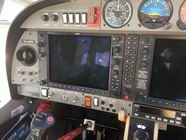
DA42 Twin Star |
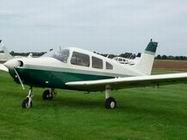
PA28 Warrior II |
||
Introduction
IRE training courses are available for the UK CAA and Danish CAA [Trafikstyrelsen] licence holders including FCL.900(c) certificate holders. Other licence holders must contact their National Aviation Authority (NAA) to ensure they will accept this training course before booking.
The assessment of competence is conducted by a UK CAA FOTI or senior examiner or Danish CAA [Trafikstyrelsen] Inspector or senior examiner as applicable at a mutually acceptable location
All applicants considering becoming an IRE shall apply to the UK CAA or Danish CAA [Trafikstyrelsen] in the first instance. If the applicant's qualifications meet the Part FCL requirements then they will be notified enabling them to complete the IRE course
The applicant will be assessed throughout the training course prior to taking the assessment of competence
Aims
The aims of IRE course are:
(a) To ensure that the applicant has the skill and potential to become a IRE
(b) To brief the IRE requirements, responsibilities and revalidation requirements
(c) To emphasise the principles of standard examiner techniques
(d) To add ME privileges to an IRE certificate (if applicable)
(e) To provide upgrade training from a CRE with IR privileges to an IRE (if applicable)
Objectives
The applicant must be able to:
(a) Demonstrate a pre-flight and post flight briefing to include facilitative skills
(b) Demonstrate how to conduct a flight test and ground examination
(c) State the privileges of the IRE
(d) Describe examiner revalidation and renewal requirements
(e) Explain the how to complete the flight test documentation and administration
(f) Correctly assess the applicant's performance including technical and non-technical skills
Pre-Entry Requirements
(a) Hold an equivalent licence, rating or certificate to the one for which they are seeking privileges to
conduct skill tests and proficiency checks:
(i) Hold an IR for SE and/or ME single pilot aeroplanes (as applicable)
(b) Hold an appropriate instructor certificate:
(i) For ME aeroplanes (if applicable)
(ii) Hold a IRI(A) or FI(A) certificate with FCL.905.FI(h) privileges
(c) Be qualified to act as pilot in command on the aircraft during a skill test or proficiency check when conducted on the aeroplane
(d) Have completed 2000 hours of flight time as pilot of aeroplanes
(e) 450 hours of flight time under IFR, of which 250 hours shall be as an instructor
In addition, the following material should be studied prior to starting the course:
Part FCL Legal basis/Scope/Format (Articles, Annexes, Appendices, AMC, GM)
Part FCL Subparts A to K
Part FCL Appendices 1-9
AMC and GM to Part-FCL
Air Ops Annex VII Part NCO
SERA
UK CAA CAP 804
UK CAA Flight Examiners Manual
UK CAA Standards Documents 1, 14, 21
UK CAA - Information Notice, Skywise, AIC
Training
Complete a training course at an ATO. The following course durations are a guide only and are dependent on your personal pre-course preparation
IRE course SE privileges - 4 days
IRE course SE and ME privileges - 5 days
To add privileges to an IRE:
ME - 2 days
Upgrade CRE with IR privileges to IRE - 3 days
Theoretical Knowledge
Examiner Core Knowledge
Health and Safety Briefing
Plan for the course
Course study materials
Course pre-requisites and candidate documentation validation
Part FCL.1015 Course requirements and course program
Pre-course study revision
Examiner Certificates, Privileges and Conditions
Part-FCL Subpart K
UK CAA Flight Examiner Handbook
EASA Flight Examiner Manual
Danish CAA [Trafikstyrelsen] - examiner.dk webpage
National Requirements/Part NCO/SERA
UK CAA Air Navigation Order
Part NCO
SERA.5005 and 5015/UK CAA ORS 4 Exemptions
Examiner Standardisation
Part FCL AMC2 FCL.1015
UK CAA Standards Documents (as appropriate)
Examiner Common Errors
Assessment and Debriefing
Part FCL AMC2 FCL 1010
Fundamentals of Assessment Errors
Use of Facilitation in Debriefs
Threat and Error Management
Testing Emergency and Abnormal Procedures
Safety Tips/Hazards
Flight Test Documentation and Administration
Flight Test Booking
Test/UK CAA Fees/Danish CAA [Trafikstyrelsen] Fees
Liability
Data Protection
UK CAA CAP 793 Use of Unlicensed Airfields for testing
UK CAA Documents
IRE specific topics
Demonstration of knowledge and understanding specific to instrument ratings
Flight test documentation and administration (practical training)
Arrangements for the conduct of skill tests and proficiency checks
Purpose of test
Schedule and format
Profile (order of events, selection of route, selection of procedures)
Oral examination
Examiner briefing format and techniques (practical training)
Conduct of Flight Exercises (practical training)
Actions after flight (practical training)
Conduct of tests and checks in FNPTII or FFS
Conduct of non-Part FCL tests and checks
UK IMC Rating
Conduct of EASA tests and checks
FCL.1000(c)
Examiners Differences Document
Briefing on the Assessment of Competence - SE privileges
Role of applicant and UK CAA FOTI/senior examiner or Danish CAA [Trafikstyrelsen] inspector/senior examiner as applicable
Addition of ME privileges
ME examining techniques in the air
Conduct of a ME test and check
ME revalidation and renewal requirements
ME flight test documentation and administration
Briefing on the Assessment of Competence - ME privileges
Role of applicant and UK CAA FOTI/senior examiner or Danish CAA [Trafikstyrelsen] inspector/senior examiner as applicable
Flight and Synthetic Training
Training may be conducted in an FNPT II with at least 1 profile in an aeroplane. At least 4 profiles will be completed
IR Skill Test SE and/or ME (as applicable)
EIR Skill Test SE and/or ME (as applicable)[UK CAA only]
IR Proficiency Check SE and/or ME (as applicable)
BIR Skill Test SE and/or ME (as applicable)[EASA only]
IRE Assessment of Competence
On successful completion of the training a recommendation will be made for the applicant to complete the assessment of competence. This must be carried out within 6 months of completion of the training. Failure to do so will result in the need for extra training
.
The applicant will be required to conduct a IR Skill Test with a UK CAA FOTI/senior examiner or Danish CAA [Trafikstyrelsen] Inspector/senior examiner as applicable acting as the test applicant. The skill test schedule is given below
Applicants wishing both SE and ME privileges will be required to conduct the IR Skill Test in the complex aeroplane, normally the ME aeroplane
Applicants adding ME privileges to an IRE certificate will only be required to conduct a ME IR Skill Test
IR Skill Test (Appendix 7 to Part FCL)
Section 1 - Pre-Flight Operations and Departure
Use of flight manual (or equivalent) especially aircraft performance calculation, mass and balance
Use of Air Traffic Services document and weather document
Preparation of ATC flight plan and IFR flight log
Pre-flight Inspection
Weather Minima
Taxying
Pre take-off briefing, take-off
Transition to instrument flight
Instrument departure procedures, altimeter setting
ATC liaison - compliance, R/T procedures
Section 2 - General Handling
Control of the aeroplane by reference solely to instruments, including: level flight at various speeds, trim
Climbing and descending turns with sustained Rate 1 turn
Recoveries from unusual attitudes, including sustained 45° bank turns and steep descending turns
Recovery from approach to stall in level flight, climbing/descending turns and in landing configuration
Limited panel: stabilised climb or descent, level turns at Rate 1 onto given headings, recovery from unusual attitudes
Section 3 - En-Route IFR Procedure
Tracking, including interception, e.g. NDB, VOR, RNAV
Use of radio aids
Level flight, control of heading, altitude and airspeed, power setting, trim technique
Altimeter settings
Timing and revision of ETAs (en-route hold, if required)
Monitoring of flight progress, flight log, fuel usage, systems' management
Ice protection procedures, simulated if necessary
ATC liaison - compliance, R/T procedures
Section 4 - Precision Approach Procedures
Setting and checking of navigational aids, identification of facilities
Arrival procedures, altimeter checks
Approach and landing briefing, including descent/approach/landing checks
Holding Procedure
Compliance with published approach procedure
Approach timing
Altitude, speed heading control (stabilised approach)
Go-around action
Missed approach procedure/landing
ATC liaison - compliance, R/T procedures
Section 5 - Non-Precision Approach Procedures
Setting and checking of navigational aids, identification of facilities
Arrival procedures, altimeter checks
Approach and landing briefing, including descent/approach/landing checks
Holding Procedure
Compliance with published approach procedure
Approach timing
Altitude, speed heading control (stabilised approach)
Go-around action
Missed approach procedure/landing
ATC liaison - compliance, R/T procedures
Section 6 - Flight with One Engine Inoperative (ME only)
Simulated Engine Failure After Take Off or on go-round
Asymmetric approach and procedural go around
Asymmetric approach and full stop landing
ATC liaison - compliance, R/T procedures
Note: Use of checklist, airmanship, anti-icing/de-icing procedures, etc. apply in all sections
IR Proficiency Check (Appendix 9 to Part FCL)
Section 1 Departure
Preflight including: documentation, mass and balance, weather briefing, NOTAM
Pre-start checks: external, internal
Engine starting: normal, malfunctions
Taxiing
Pre-departure checks: engine run-up (if applicable)
Take-off procedure: normal with flight manual flap settings, crosswind (if conditions are available)
Climbing: Vx/Vy, turns onto headings, level off
ATC liaison - compliance, R/T procedure
Section 3B
Instrument Flight
Departure IFR
En route IFR
Holding procedures
3D operations to decision height/altitude (DH/A) of 200ft (60 m) or to higher minima if required by the approach procedure (autopilot may be used to the final approach segment vertical path intercept)
2D operations to minimum descent height/altitude (MDH/A)
Flight exercises including simulated failure of the compass and attitude indicator: rate 1 turns, recoveries from unusual attitudes
Failure of localiser or glideslope
ATC liaison - compliance, R/T procedures
Section 6 Simulated Asymmetric Flight (not applicable to SE IR)
(This section may be combined with Sections 1 and 3B)
Simulated engine failure during take-off (at a safe altitude unless carried out in an FFS or an FNPT II)
Asymmetric approach and go-around
Asymmetric approach and full stop landing
ATC liaison - compliance, R/T procedures
Validity
36 months
Revalidation
(a) Conduct 6 skill tests/proficiency checks/assessments of competence within the validity of the certificate (see note 1)
(b) Conduct 1 skill test/proficiency check/assessment from in the final year as an observed or dummy test with a UK CAA FOTI/senior examiner or Danish CAA [Trafikstyrelsen] Inspector/senior examiner as applicable
(c) Attend an examiner refresher course (seminar) in the final year of validity of the certificate (see note 2)
Notes:
1.
When an examiner holds more than one examiner certificate, combined revalidation of all examiner privileges may be achieved when the applicant complies with the requirements of (a), (b) and (c). However, the Danish CAA [Trafikstyrelsen] requires the Danish CAA [Trafikstyrelsen] examiner to have conducted 6 tests/checks/assessments per examiner privilege held (e.g. 6 as a TRE, 6 as a IRE, etc). If this requirement is not met, the examiner privilege will be removed, unless the observed test is performed for that specific privilege
2. The examiner refresher course (seminar) must be approved by the UK CAA or Danish CAA [Trafikstyrelsen] to be accepted
Renewal
(a) Complete a skill test/proficiency check/assessment of competence as an observed or dummy test with a UK CAA FOTI/senior examiner or Danish CAA [Trafikstyrelsen] Inspector/senior examiner as applicable (see note 2)
(b) Attend an examiner refresher course (seminar) (see note 1)
Both (a) and (b) shall be completed within 12 months prior to application to renew
Notes:
1.
The examiner refresher course (seminar) must be approved by the UK CAA or Danish CAA [Trafikstyrelsen] to be accepted
2. This item shall be completed last for the Danish CAA [Trafikstyrelsen] in accordance with FCL.1030(ii). This is not the case for the UK CAA
FCL.1030
When conducting skill tests, proficiency checks and assessments of competence, examiners shall:
(i) ensure that communication with the applicant can be established without language barriers
(ii) verify that the applicant complies with all the qualification, training and experience requirements in Part FCL for the issue, revalidation or renewal of the licence, rating or certificate for which the skill test, proficiency check or assessment of competence is taken
(iii) make the applicant aware of the consequences of providing incomplete, inaccurate or false information related to their training and flight experience
Privileges
To conduct skill tests for the issue, and proficiency checks for the revalidation or renewal of EIR or IR
References
UK CAA Standards Documents 1, 14, 21
UK CAA Flight Examiners Handbook
EASA Flight Examiner Manual
Danish CAA [Trafikstyrelsen] - examiner.dk webpage
UK CAA CAP 393 Air Navigation Order (ANO)
UK CAA CAP 804
SERA
Part FCL, ORA and ARA including associated AMC, GM and Appendices
Examiner Manual (Part FCL edition) by Alan Newton